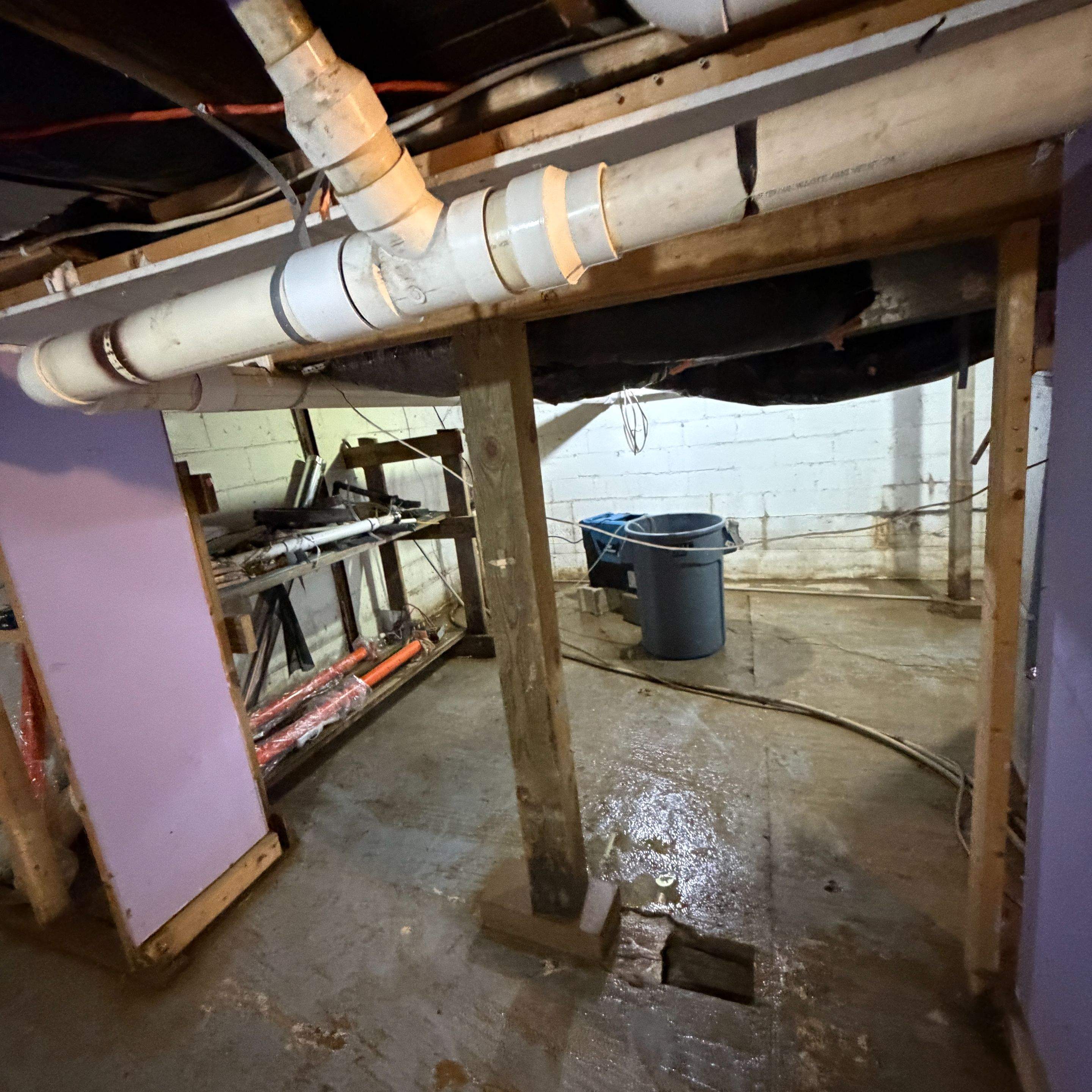
Problem: You Do Not Know if the Water Is Safe
Not all basement water is equal. A burst supply line is Category 1 (clean). A failed sump pump pulling groundwater is usually Category 2 (gray). A sewer backup or floodwater that traveled across the yard is Category 3 (black). The category determines what can be saved, what gets thrown out, and how aggressive the cleanup must be.
Solution: Identify the Source Before You Step In
From the top of the stairs, look for clues. Is water trickling from a wall crack after a storm? That is likely groundwater. Is it bubbling up from a floor drain with an odor? Treat it as sewage and stay out. When our crews arrive in Batesville, the first ten minutes are spent confirming category, shutting off power to the affected circuits, and isolating the source. If you are unsure, call us before wading in. For sewer related flooding, our sewage cleanup service uses PPE and EPA registered disinfectants that household cleaners cannot match.
Category can also shift over time. A Category 1 leak that sits for 48 hours in a warm basement becomes Category 2 as it picks up contaminants from the slab, carpet pad, and stored items. That is one of the reasons response time matters so much. The longer you wait, the more invasive the cleanup becomes, and the more contents you lose.
Solution: Document Everything and Use the Right Language
Adjusters respond to specifics. "Sudden discharge from failed water heater on the south wall, water migrated to finished basement, Category 1 at source" lands differently than "my basement flooded." We bill direct to most major carriers and provide the moisture logs, photos, and scope they need. If you want to understand the process before you call your agent, our walkthrough on filing a water damage insurance claim covers the documentation, deductibles, and timeline you should expect.
Solution: Structural Drying with Equipment That Matches the Load
Drying a basement is math, not guesswork. A 1,200 square foot basement with Category 2 water typically needs 8 to 14 air movers, 2 to 3 commercial dehumidifiers, and 3 to 5 days of monitored drying. Daily moisture readings tell us when materials hit dry standard. Skip this step and you are buying a mold remediation job in three weeks. The 24 to 48 hour mold window is real, and once it closes, the bill grows fast.
Problem: You Are Worried About Insurance Coverage
Most standard homeowner policies in Indiana do not cover groundwater or surface flooding. They often do cover sudden internal failures like a burst pipe, a failed water heater, or a washing machine supply line. Sewer backup is a separate endorsement that many Batesville homeowners do not realize they can add for a small annual premium.
Problem: The Surface Looks Dry but the Structure Is Not
Concrete feels dry to the touch in 48 hours. The wood framing behind the wall can still be sitting at 30 percent moisture content for weeks. That is where mold starts, behind baseboards, inside wall cavities, and under the subfloor.
Problem: It Could Happen Again Next Storm
Batesville gets clusters of heavy rain events, and the same basement tends to flood the same way each time. Cleaning up without addressing the cause is a temporary win.
Solution: Prevention That Actually Holds Up
Before we wrap a job, we walk the property and point out what we saw:
- Sump pump condition, age, and whether a battery backup or water powered secondary makes sense.
- Grading, downspout extensions, and window well drainage that pushed water toward the foundation.
- Foundation cracks, cove joint seepage, or a failing sewer lateral that should be scoped by a plumber.
Some of these are 50 dollar fixes. Some are bigger. We will tell you which is which, and we will note which ones to handle before the next forecasted storm rolls through.
Problem: You Need Help Right Now, Not Tomorrow
Water damage does not pause overnight. Waiting until business hours costs you more in materials and dry time than calling at 11 pm.
Solution: A 24/7 Local Crew
Batesville Water Restoration runs emergency response across Batesville and Central Indiana with a target on-site time inside a few hours, faster when conditions allow. One call, one team, from extraction through reconstruction.
Solution: A Sorted, Documented Contents Process
Our crews separate contents into three groups on site: salvageable with cleaning, salvageable with specialty restoration (documents, photos, electronics), and non-restorable. Anything porous that touched Category 3 water leaves the home. Items pulled for restoration get inventoried with photos so they can be tracked through the claim. Hard goods like metal shelving, plastic bins, and sealed tools are typically wiped, sanitized, and returned. It is a slower process than a dumpster sweep, but it saves the things that actually matter to you.
Problem: Standing Water Is Still Rising
Every minute water sits, drywall wicks it upward at roughly one inch per hour, hardwood cups, and the carpet pad becomes unsalvageable. A finished basement can absorb thousands of gallons into materials you cannot see.
Solution: Professional Extraction Within the First Hours
Truck mounted extractors pull 100 plus gallons per minute, which is on a different planet than a shop vac. Here is what a proper extraction visit looks like in a Batesville home:
- Power isolation and a moisture map of every affected room using thermal imaging and pin meters.
- Bulk water removal from concrete, tile, and saturated carpet pad.
- Controlled demolition of unsalvageable drywall (typically the bottom 12 to 24 inches, called a flood cut) and wet insulation.
This is also the stage where photo documentation matters for your claim. We log readings, source, and damaged contents so the adjuster has what they need.
Problem: Contents and Keepsakes Are Soaked
Basements store the things people care about most: photo albums, holiday decorations, kids' artwork, tools, and seasonal furniture. After a flood, deciding what to keep and what to toss feels overwhelming, especially when the items are wet and heavy.