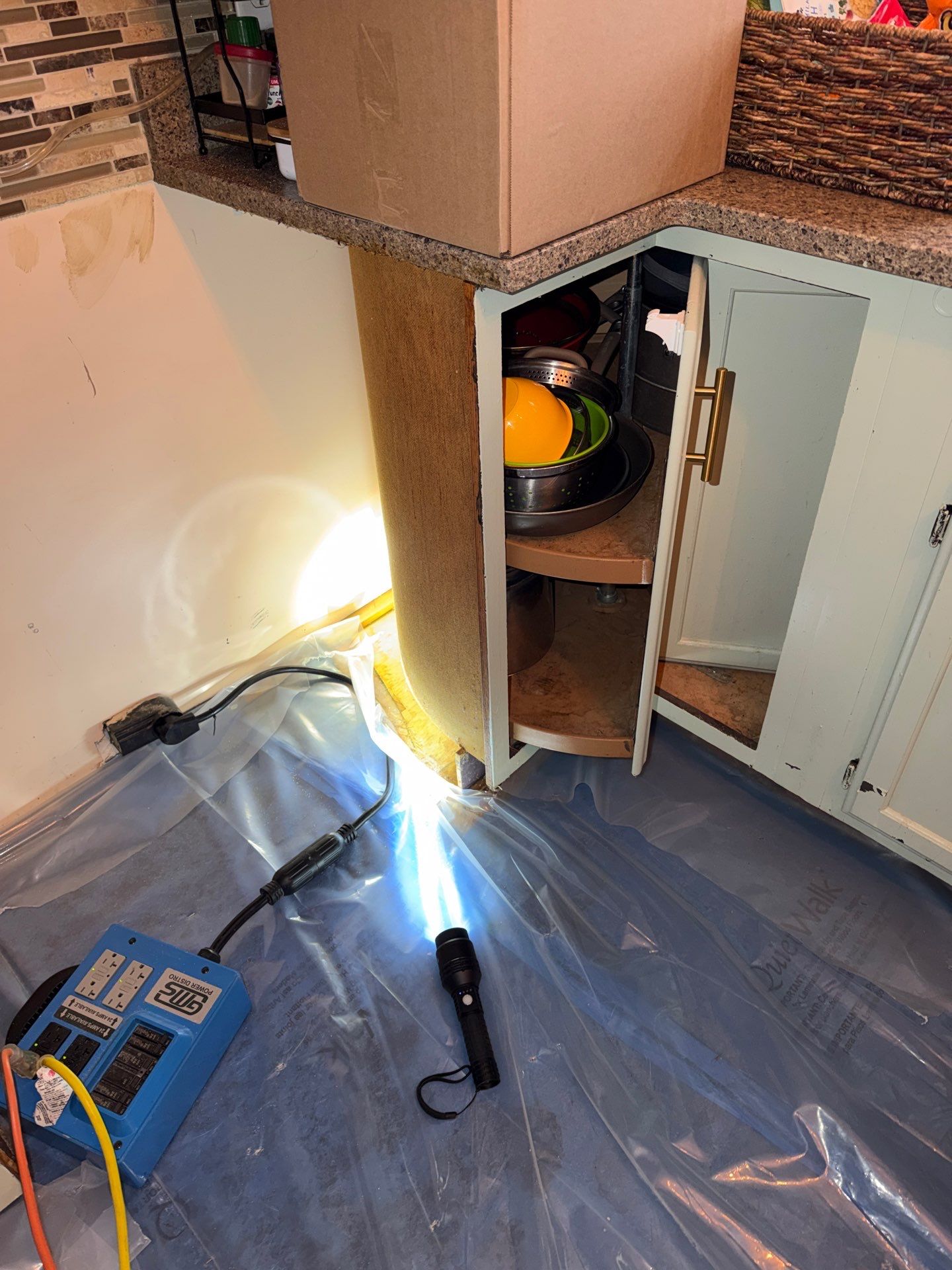
The Burst Supply Line: A Textbook Covered Loss
Back to that 6:40 a.m. call. When our crew arrived in Batesville about 45 minutes later, the homeowner was on hold with her carrier. We pulled meter readings, photographed the failed braided line, and started extraction while she filed the claim. Her policy covered sudden and accidental discharge of water from a plumbing system, which is the most common covered peril in a standard HO-3 policy. The adjuster approved mitigation that same afternoon. Total paid loss came in around $11,400 for drying, drywall, cabinet replacement, and flooring. Her deductible was $1,000.
The reason this claim moved fast was documentation. We handed the adjuster moisture maps, daily drying logs, and photos of the failure point. When carriers see a clean cost breakdown built to insurance standards, they tend to approve without a fight. When they see a vague invoice, they ask questions for two weeks.
One detail worth flagging on that job: the braided line was original to the home, installed in 2009. Most manufacturers rate those lines for five to eight years. The adjuster did not ask about age, but if he had, the claim still would have paid because the failure itself was sudden. Age becomes a denial factor only when the carrier can prove visible corrosion or prior repairs were ignored. We photograph the failed component every time, partly for the file, partly so the homeowner has evidence if a subrogation question comes up later.
The Slow Leak Denial Nobody Saw Coming
A retired couple in Batesville called us after they noticed the laminate floor near their dishwasher had started to cup. Pulled the toe kick, found black staining and soft subfloor. The leak had been weeping for somewhere between six and eighteen months based on the tannin lines on the framing. We told them straight up before they filed: this is going to be a tough claim.
Their carrier denied it. The denial letter cited the standard exclusion for damage caused by continuous or repeated seepage over a period of weeks, months, or years. That language sits in nearly every homeowners policy in the country. The couple still needed the work done, so we scoped a cash-pay repair around $4,800, which covered subfloor replacement, antimicrobial treatment, and reinstalling flooring. If we cannot help you win a claim, we will tell you directly before you waste time filing one.
There is a wrinkle some homeowners miss. If a slow leak causes a sudden, secondary event, like a ceiling collapse from saturated drywall, the resulting damage from that collapse can sometimes be covered even when the leak itself is not. We have seen this play out twice in Batesville in the last three years. The carrier paid for the ceiling repair and contents damage but excluded the pipe and the framing rot. Worth asking your adjuster about if your loss has both elements.
The Ice Dam Surprise
A Batesville family called us in February after meltwater pushed back under their shingles and came through a bedroom ceiling. Ice dam losses sit in a gray zone. Most HO-3 policies cover the interior damage from water entering through a roof that was overwhelmed by ice, but they exclude the roof repair itself if it failed from age or poor ventilation. The adjuster paid roughly $6,300 for ceiling, insulation, and contents. The roof work, about $2,100, came out of pocket. Knowing that split before filing kept the conversation honest.
The Sump Pump Failure That Required an Endorsement
During a heavy April storm, a Batesville homeowner watched his sump pump die mid-cycle. By the time he got home from work, the basement had about four inches of standing water across 900 square feet. He assumed his policy covered it. It did not, at least not the base policy. Standard homeowners insurance excludes water that backs up through sewers or drains and water that enters because a sump pump failed.
He had bought a water backup endorsement two years earlier for about $75 a year, with a $10,000 limit. That endorsement saved him. We ran six air movers and two dehumidifiers for four days, removed wet pad and base trim, and treated the framing. Final invoice was around $7,200. If you do not have that endorsement on your Batesville policy, call your agent this week, not after the next storm. For more on this specific scenario, our write-up on sump pump failure and basement flooding solutions walks through prevention and response.
What Almost Always Gets Excluded
After hundreds of Batesville claims, the exclusions we see denied most often fall into a short list:
- Flood from rising surface water (requires separate NFIP flood policy)
- Long-term leaks, seepage, and hidden moisture over weeks or months
- Damage caused by lack of maintenance, including failed caulk or grout
- Mold not directly tied to a covered sudden loss
- Groundwater seepage through foundation walls or slabs
The Sewage Backup: Category 3 and a Hard Conversation
One of the messier jobs we ran last spring was a Batesville home where the main line clogged and pushed contaminated water up through a basement floor drain. Category 3 water carries bacteria, and the cleanup follows IICRC S500 protocols, which means contaminated porous materials get removed, not dried. Carpet, pad, and the bottom 24 inches of drywall came out.
The homeowner's base policy excluded sewer backup. His endorsement covered it up to $15,000. Total loss came in at $13,800. We documented every contaminated material removed, photographed the source, and submitted a line-item estimate that matched the adjuster's software. If you are dealing with anything that looks or smells like sewage, do not walk through it. Read our guide on safe sewage backup cleanup first and then call us.
How We Help You Win the Claim
When Batesville Water Restoration arrives at a Batesville loss, we are not just there to dry the structure. We are building the file the adjuster needs. That means thermal imaging photos, moisture readings logged daily, scope notes that tie back to IICRC S500, and a line-item estimate written in Xactimate language. We have had adjusters tell us our documentation is the cleanest they see in central Indiana. That is not bragging, that is the result of doing this since 2018 with IICRC certified techs on every job and a BBB A+ rating we protect on every claim.
Coverage is not a guessing game once you understand the cause of loss. Sudden and accidental usually pays. Gradual and preventable usually does not. Storm-driven flooding needs its own policy. Sewer and sump backup need their own endorsement. If you are not sure which bucket your loss falls in, we will look at it and tell you before you file.