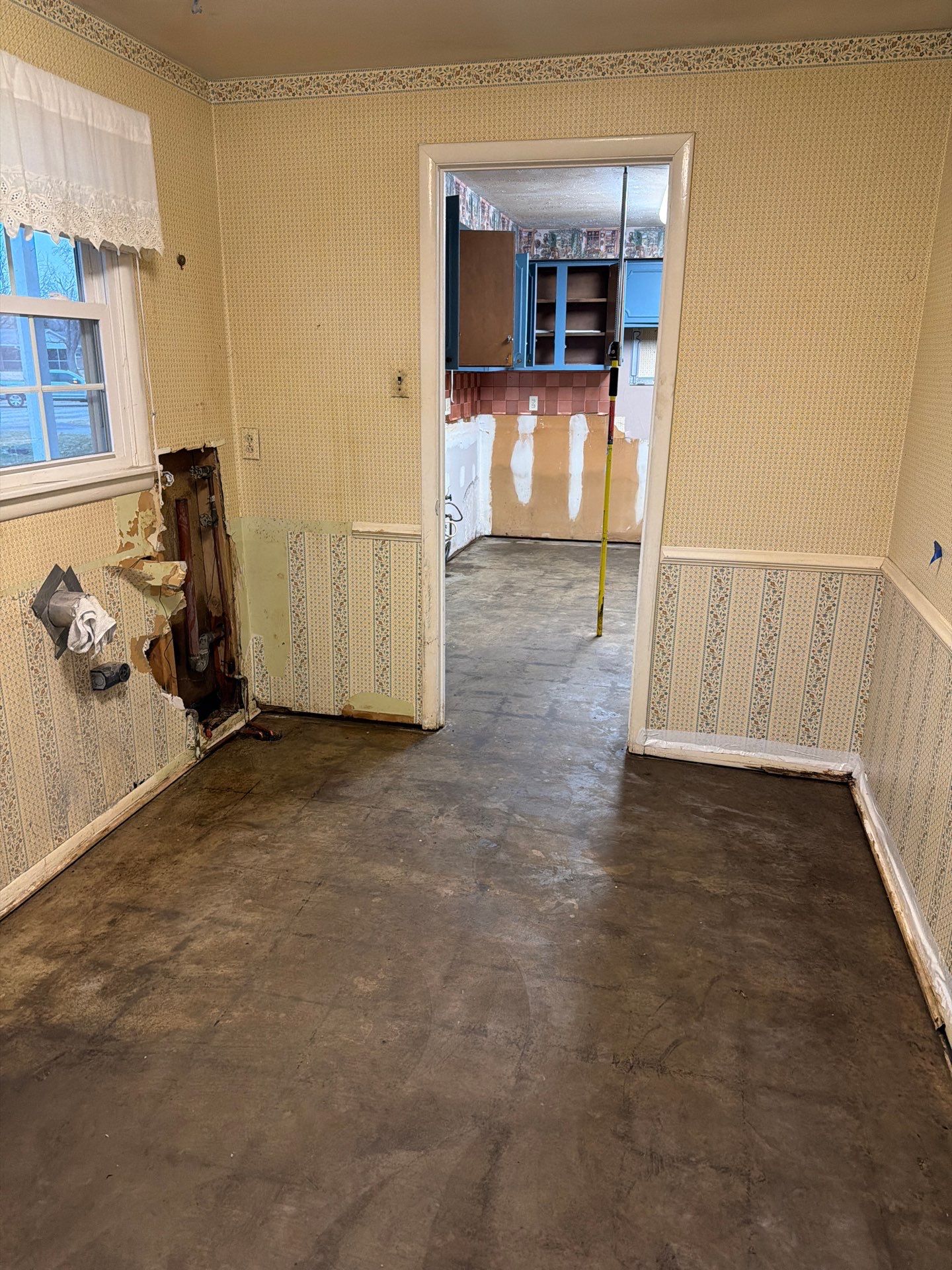
The 6 Factors That Decide How Much Drywall Comes Out
Every removal decision comes back to a short list of variables. Our crews check each one before a single cut is made.
- Water category. Clean, grey, or black water changes everything.
- Soak time. Hours versus days matter more than gallons.
- Wick height. How far moisture climbed up the panel.
- Insulation type. Fiberglass, cellulose, or none behind the wall.
- Paper facing condition. Bubbled, soft, or stained paper signals failure.
- Mold growth. Anything past 48 hours gets scrutinized closely.
Category 1: Clean Water Removal Rules
Clean water from a supply line or appliance gives you the best chance of saving drywall. The panel itself is gypsum, and gypsum can dry if conditions are right.
- Caught within 24 to 48 hours, most clean water drywall can stay in place
- Small inspection holes drilled at the base let us measure moisture without full removal
- Cavity drying mats and injection systems push warm air behind the wall
- Baseboards usually come off either way to vent the bottom plate
- Insulation behind the wet section is the most common reason we end up cutting
- Painted surfaces with latex paint dry slower than bare gypsum and need more airflow
- Wallpaper acts as a vapor barrier and often forces removal even on Category 1 jobs
For more context on clean versus contaminated water, our breakdown of Category 1 vs Category 2 vs Category 3 water damage is worth a read before you commit to any demolition.
Category 2: Grey Water Cut Lines
Grey water carries contaminants from dishwashers, washing machines, or aquariums. The drywall is no longer a candidate for full save.
- Standard cut line is 12 to 24 inches above the visible water line
- Wet insulation behind the panel must come out, no exceptions
- Studs and bottom plates get cleaned, treated, and dried
- Paper facing that absorbed grey water cannot be sanitized in place
- Cut lines are made horizontally so the replacement seam lands at a logical height
- Containment plastic is hung before cutting to keep dust out of clean areas
Ceiling Drywall: A Different Set of Rules
When water comes from above, the ceiling drywall gets evaluated differently than wall panels. Gravity loads change the failure mode.
- Sagging or bowed ceiling drywall is removed immediately for safety
- Stained but firm ceiling panels may be saved if moisture readings clear
- Popcorn texture ceilings often require full panel replacement once wet
- Insulation above the ceiling is checked for clumping and weight gain
- Recessed light cans become entry points for cavity drying equipment
The Flood Cut Explained
The term flood cut refers to a clean horizontal removal at a set height above the floor. Crews use it because it is faster, cleaner, and easier to patch than ragged cuts following moisture stains.
- Standard flood cut height is 24 inches off the subfloor
- Higher cuts at 48 inches are used when wick climbed past two feet
- The cut lands between studs so the replacement panel has solid backing
- A chalk line and laser level keep the cut straight across the room
- Vapor barriers and outlets are mapped before the saw starts
- Plumbing and gas lines inside the cavity are located with a stud finder first
Inspection Tools That Drive the Cut Decision
Guesswork costs you money. Real assessments use real instruments.
- Pinless moisture meters scan the surface without leaving holes
- Pin meters confirm moisture content at depth
- Thermal imaging cameras spot temperature differences behind the wall
- Borescopes let us see inside the cavity through a 1/2 inch hole
- Hygrometers track ambient humidity to plan the drying setup
- Manometers verify that negative air containment is holding pressure
Category 3: Black Water and the 2 Foot Rule
Sewage backups, toilet overflows from the trap side, and flood water from outside all qualify as Category 3. This is the most aggressive removal scenario.
- Minimum 24 inch cut above the high water mark, often higher
- All porous materials in the contact zone are removed, including insulation
- Bottom plates may need replacement if saturation is deep
- Wall cavity is HEPA vacuumed and treated with an antimicrobial
- Air sampling may be recommended before reconstruction
- Technicians wear full PPE including respirators rated for biological hazards
- Removed material is bagged and disposed of as contaminated waste, not regular debris
If you are dealing with sewage, the work falls under our sewage cleanup protocols and is not a DIY project.
Typical Timeline From Cut to Reconstruction
Once removal is done, the drying phase begins. Here is a rough sequence for an average single room loss in Batesville.
- Day 1: Assessment, water extraction, demo, equipment placement
- Days 2 to 4: Active drying with air movers and dehumidifiers
- Day 5: Moisture verification and equipment removal
- Days 6 to 10: Reconstruction including new drywall, taping, and paint
What Stays, What Goes: A Quick Field Reference
Here is how our techs sort materials during a typical residential job.
- Stays: Drywall above the wick line with no staining, paint that passed a moisture meter test, framing lumber under 16% moisture content
- Stays with drying: Slightly damp gypsum in Category 1, dry insulation that was never contacted, baseboards made of solid wood (sometimes)
- Goes: All wet insulation, MDF baseboards and trim, drywall with bubbled paper, any panel touched by Category 2 or 3 water
- Always goes: Drywall in a Category 3 contact zone, mold colonized panels, paper faced gypsum with active microbial growth
How Batesville Water Restoration Handles the Cut Decision
Our process is built to remove only what needs to come out, document everything for your insurer, and get reconstruction started fast.
- Dispatch to your Batesville property in most cases within 2 hours of your call
- on site moisture mapping with photos saved to your claim file
- Written scope of removal before any saw touches the wall
- Daily drying logs shared with you and your adjuster
- Single point of contact from demo through final paint
Why Cutting Too Little Is Worse Than Cutting Too Much
Homeowners often push to save more drywall than is realistic. We understand the instinct. The math rarely works in your favor though.
- Trapped moisture behind a saved panel feeds mold growth after water damage within days
- Refinishing a stained panel costs more than replacing it cleanly
- Insurance adjusters expect proper cut lines, not patchwork
- A second demo three weeks later doubles your labor cost
- Hidden moisture warps adjacent framing and damages flooring
- Lingering odors from damp gypsum can take months to fully clear
Baseboards, Trim, and Outlets
The cut decision is not just about the panel.
- Baseboards come off in nearly every water loss to vent the cavity
- Outlet boxes are de energized before cutting, never cut around live wiring
- Door casings on wet walls are inspected for swelling at the bottom
- Crown molding stays if the upper wall stayed dry
- Tile backer board behind bathroom walls follows different rules
- Switch plates and HVAC registers come off first to prevent crack propagation